
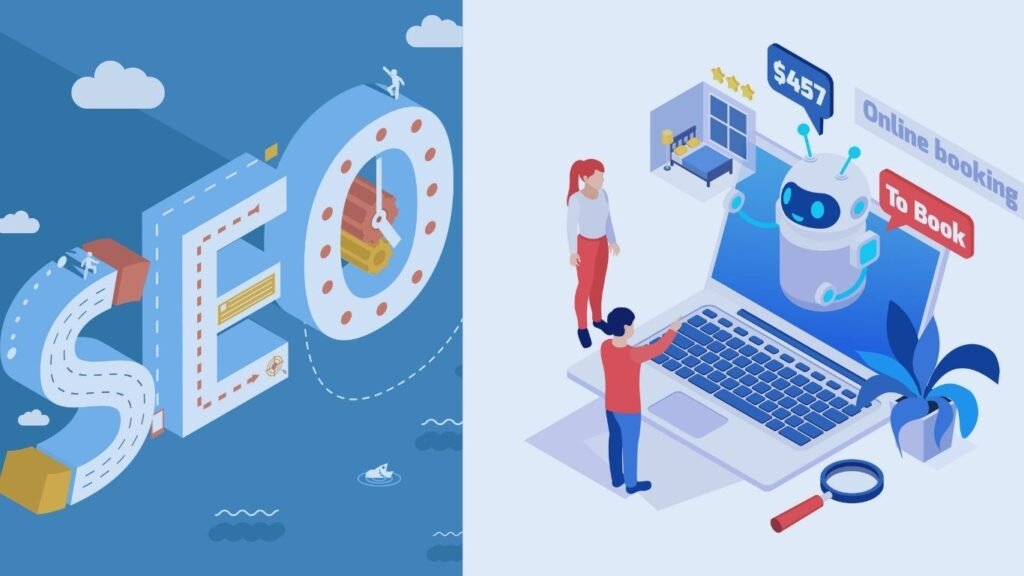
The search Ecosystem has shifted. If you are still operating on the 2020 playbook of just “ranking for keywords,” you are essentially leaving your brand’s future to chance. As we move deeper into 2026, the industry is no longer just about Google’s blue links. We are now navigating a complex ecosystem where Search Engine Optimization (SEO), Generative Engine Optimization (GEO), and Answer Engine Optimization (AEO) must work in harmony.
According to Muddasar, a well-known Digital Marketer from Pakistan, the debate isn’t about which of these acronyms will win, but about how you integrate them to ensure your brand is visible wherever a user asks a question, be it a search bar, a chatbot, or a voice assistant.
Defining the Trio: AEO VS GEO and SEO
To understand the way forward, we must first clear the air on what these terms mean in the current market.
SEO (Search Engine Optimization): The Foundation and remains the bedrock:
SEO is still the bedrock of any sustainable digital presence. Unlike paid advertising, which stops the moment you cut the budget, SEO builds long-term equity by aligning your website with the specific intent of your audience.
By optimizing technical structures, refining on-page content, and establishing domain authority, you create a high-performance asset that attracts high-quality traffic consistently.
In a competitive market, a solid SEO foundation ensures that your business is not just visible but the preferred choice for users actively searching for solutions.
It is the process of making your website visible in traditional search engines. It focuses on technical health, on-page relevance, and off-page authority. While some claim “SEO is dead” every few years, the reality is that traditional search still drives the highest volume of commercial intent traffic.
AEO: Answer Engine Optimization:
While SEO is the bedrock of search, Answer Engine Optimization (AEO) is the essential next layer for the modern AI-first world. As users increasingly turn to AI platforms like Gemini, ChatGPT, and Perplexity for instant solutions, AEO focuses on structuring your content to be the definitive “source of truth” these engines cite. By utilizing concise Q&A formats, deep schema markup, and authoritative data, you move beyond just ranking for keywords to becoming the direct, conversational answer delivered to the user. In 2026, AEO is what ensures your brand remains visible in a “zero-click” environment where the AI provides the answer before a user ever hits a website.
AEO (Answer Engine Optimization): The Direct Response:
AEO is the art of being the “single source of truth.” When a user asks Alexa, “How do I fix a leaky faucet?” or sees a zero-click AI Overview on Google, that is AEO in action. It’s about structuring content so clearly that an engine can extract a direct answer without the user ever needing to visit your site.
Key Pillars of AEO:
- Structured Clarity: Using schema.org and bulleted summaries to help AI parse your data instantly.
- Direct Intent: Answering specific “Who, What, How” questions in the first 50–70 words of a section.
- Entity Authority: Establishing your business as a recognized expert so AI “trusts” your content enough to quote it.
- Zero-Click Visibility: Securing the top spot in Featured Snippets and AI Overviews.
GEO (Generative Engine Optimization): The AI Influence:
GEO is a relatively new discipline focused on influencing how Large Language Models (LLMs) like ChatGPT, Gemini, and Claude perceive and represent your brand. Unlike SEO, which aims for a click, GEO aims for a mention within a synthesized AI response. It’s about becoming part of the “knowledge base” that AI uses to answer complex queries.
Why the Debate Exists: Evolution or New Discipline?
There is a heated discussion among professionals. One side argues that GEO and AEO are simply “modern SEO.” They believe that if you are doing SEO correctly using schema, writing clearly, and building authority, you are already doing GEO and AEO.
However, according to Muddasar, a well-known Digital Marketer from Pakistan, treating them as identical is a mistake. While the tactics overlap, the retrieval models are fundamentally different. Traditional search engines rank documents; generative engines synthesize fragments of information. If you don’t optimize for “sub-document processing”—where AI pulls specific snippets rather than whole pages, you will find your brand left out of the AI conversation.
The 2026 Strategy: Search Everywhere Optimization
In 2026, the winning strategy is what we call “Search Everywhere Optimization.” This approach acknowledges that the user journey is no longer linear. A customer might discover your brand on TikTok, research a solution via ChatGPT (GEO), ask a specific question to Siri (AEO), and finally perform a branded search on Google (SEO) to make a purchase.
To succeed in this environment, your content must be optimized for both human readers and machine crawlers. Here is how to navigate the road ahead.
1. The Shift to Entity-Based Content
In the past, we optimized for keywords. Today, we optimize for entities. An entity is a well-defined object or concept, such as your brand, your service, or a specific niche topic.
According to Muddasar, a well-known Digital Marketer from Pakistan, AI engines look for “topic authority.” They want to see that your website is a consistent, reliable source of information on a specific subject. By clearly defining your brand’s expertise across the web, on your site, social profiles, and industry directories, you help AI “connect the dots” and recommend you as a trusted authority.
2. High-Intent “Chunked” Content
One of the biggest changes in 2026 is how content is consumed by bots. AI engines perform “sub-document processing.” This means they don’t always read your entire 2,000-word article; they look for the specific paragraph that answers the user’s prompt.
To stay relevant, you must practice “chunking.” This involves:
- Using clear, descriptive H2 and H3 headings that mirror user questions.
- Writing tight, factual paragraphs (100–300 words) that can stand alone.
- Placing direct answers to questions in the first 100 words of a section.
3. Technical Health Beyond Googlebot
Technical SEO used to be about making Google happy. Now, you must consider AI crawlers like GPTBot and ClaudeBot.
According to Muddasar, a well-known Digital Marketer from Pakistan, technical health in 2026 includes maintaining an updated llms.txt file. Much like robots.txt tells search engines where to go, llms.txt provides a streamlined version of your site’s data specifically for AI training models. If your site is too heavy with JavaScript or has a messy structure, AI bots will simply skip over your data in favour of a cleaner source.
4. The E-E-A-T Powerhouse
Experience, Expertise, Authoritativeness, and Trustworthiness (E-E-A-T) are more important now than ever. With the web being flooded by AI-generated “garbage” content, search and answer engines are looking for signals of human reality.
Including verifiable data, first-party research, and expert quotes is no longer optional. When you cite a reputable source or provide a unique case study, you are providing the “citations” that AI engines love to reference. This is the bridge between SEO and GEO: the more authoritative you are, the higher you rank in Google, and the more often you are cited by Gemini.
In 2026, brand authority is built on consistency within AI systems. Unlike traditional search, generative engines develop long-term associations between brands and topics. According to Muddasar, a well-known SEO/performance Marketer from Pakistan, maintaining factual accuracy across all platforms is vital, as a single contradiction can damage your reputation with AI models. To win across SEO, GEO, and AEO, you must treat your content as a permanent knowledge asset rather than a temporary traffic source.
5. Optimizing for the “Zero-Click” Reality
A common fear is that AEO and AI Overviews will steal website traffic. If the AI provides the answer, why would anyone click your link?
While it is true that informational traffic may see a dip in CTR (Click-Through Rate), the quality of the remaining traffic is often much higher. According to Muddasar, a well-known SEO/Digital Marketer from Pakistan, being the “cited source” in an AI answer builds incredible brand trust. When a user finally does click through from an AI response, they are often much further along in the buyer’s journey and more likely to convert.
How to Implement This in Your Business:
If you are managing a digital presence in 2026, you cannot afford to ignore any of these pillars. Here is a practical checklist for the way forward:
- Conduct a “Voice and AI” Audit: Ask ChatGPT or Perplexity about your services. If your brand doesn’t appear, or if the information is wrong, you have a GEO gap.
- Implement Schema Markup: Use structured data (Schema.org) to tell engines exactly what your content is about. This is the “language” that both Google and AI understand perfectly.
- Build a knowledge Hub: Instead of random blog posts, create a structured library of content that covers every “Who, What, Where, When, and Why” in your niche.
- Focus on Brand Mentions: GEO thrives on what others say about you. Getting mentioned on authoritative sites, in Reddit discussions, and in industry news helps AI models associate your name with quality.
The Verdict: What is the Way to Go?
The debate between SEO, GEO, and AEO is ultimately a distraction from the real goal: helping users find the best information.
According to Muddasar, a well-known Digital Marketer from Pakistan, the way to go in 2026 is a holistic “Search Everywhere” approach. You must maintain the technical excellence of SEO to satisfy Google, the clarity of AEO to win the “zero-click” battle, and the authoritative presence of GEO to ensure AI systems recommend you.
The search Sector is changing, but the core principle remains the same: humans want answers, and technology is just the medium. By optimizing for every surface where a user might seek knowledge, you don’t just survive the AI revolution; you lead it.
If your business is struggling to find its place in this new era, remember that visibility is no longer just a rank on a page. It is a presence in the digital consciousness. Stay fresh, stay authoritative, and most importantly, stay structured. That is the only way to stay ahead in 2026.
The search ecosystem of 2026 demands more than just traditional rankings; it requires a sophisticated integration of SEO, GEO, and AEO.
While SEO remains your foundation for high-intent traffic, GEO (Generative Engine Optimization) ensures your brand is mentioned by AI models like ChatGPT and Gemini, and AEO (Answer Engine Optimization) positions you as the definitive “single source of truth” for voice and zero-click queries. Success now hinges on Search Everywhere Optimization, focusing on entity-based authority, “chunked” content for AI processing, and unwavering E-E-A-T.
Secure Your Digital Future in 2026 to grow faster:
Navigating the shift from keywords to AI-driven entities requires a seasoned strategist who understands the mechanics of modern retrieval models. If your brand isn’t appearing in AI syntheses or voice answers, you are losing ground to the competition. Gain a decisive edge by aligning your digital operations with the future of search. Get expert consultancy from a professional SEO today. Contact us at Muddasar SEO to build your “Search Everywhere” strategy.